Monarch Butterfly Habitat
Learn how our transmission corridors provide vital butterfly habitats while delivering safe, reliable electricity.
La información de esta página es para clientes en
{{ nombre del pueblo }}
Committed to protecting the land, wildlife and habitat that may interact with our operations throughout New England.

Environmental stewardship is the responsible use and protection of the natural environment through conservation and sustainable practices. This includes taking action to preserve ecosystems, reduce pollution, and using resources wisely to ensure a healthy planet for current and future generations.
We manage land throughout our service territory, much of which is located within large transmission line rights-of-way. That land is a unique habitat for a variety of diverse wildlife, insects, plants and other natural resources that we strive to protect.
We also care for land that the public and property owners can enjoy, taking great care to foster biodiversity, promote conservation, protect wildlife and cultural resources.
We see the preservation of resilient ecosystems within our service territory as part of our responsibility and an important aspect of our ability to deliver reliable services to our customers.
The land in our right of ways (ROWs) often contains features that make it a unique habitat for plants and animals. Our environmental specialists work to help us maintain this land in a way that minimizes impacts of our operation and preserves the biodiversity of the region.
This strategy of management can promote niche habitats that are essential to the conservation of many protected species of plants, birds, amphibians and reptiles. These areas are also essential in facilitating animal movement, as they act as patches of wilderness in more densely populated New England areas, or as travel corridors for migrating birds.
We often work in partnership with government agencies and wildlife biologists to help avoid impacting plants and animals and support a sustainable environment around our operations and infrastructure.

Learn how our transmission corridors provide vital butterfly habitats while delivering safe, reliable electricity.
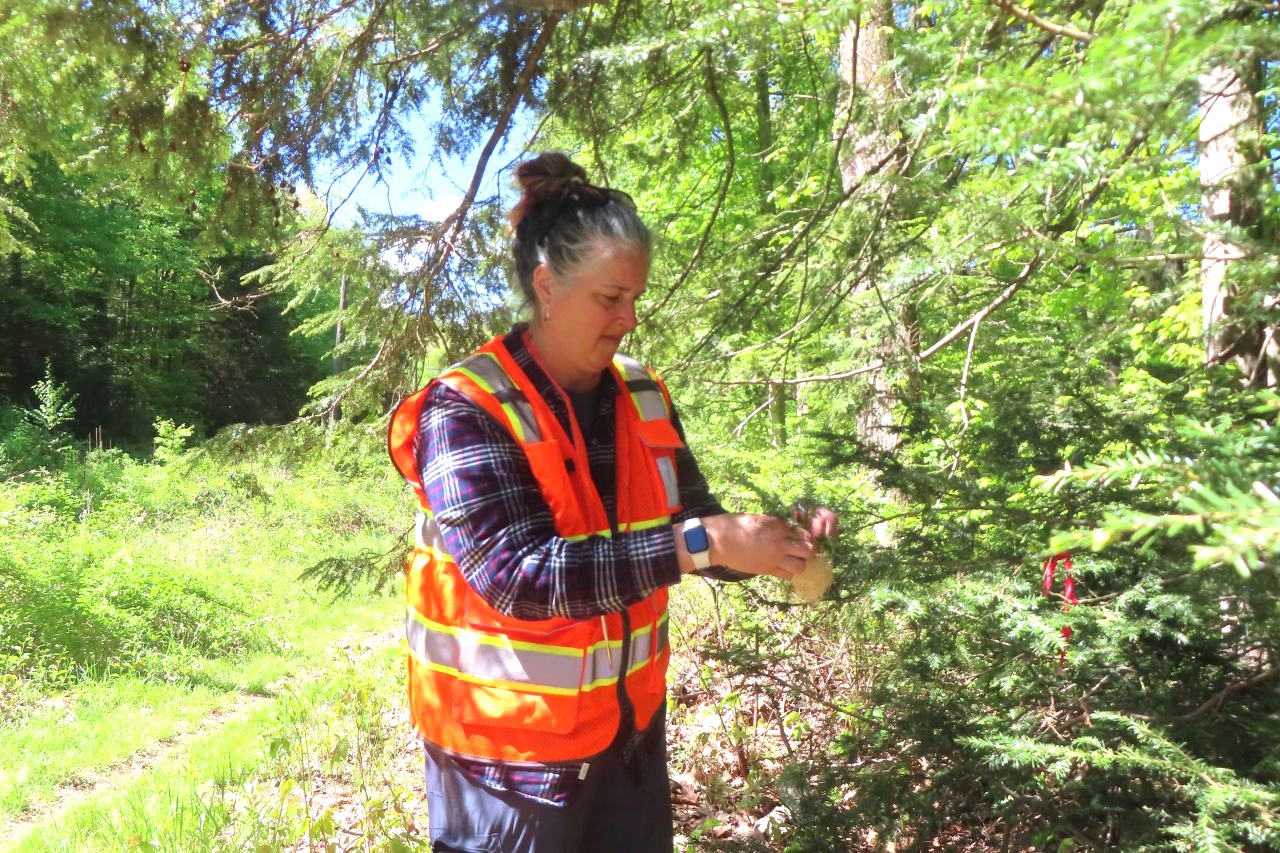
We recently conducted the third year of a pilot project in partnership with the University of New Hampshire to assess the feasibility of rearing Galerucella sp. beetles to explore controlling the invasive purple loosestrife plant in our ROWs.
By rearing the beetles in a controlled environment, we can deploy them in large numbers in targeted areas to manage the purple loosestrife and allow for a resurgence of native vegetation.
We have also partnered with the Avalonia Land Conservancy to develop a plan to avoid wetland impacts and disturbance of a unique Atlantic white cedar swamp that provides habitat for state-listed rare species.
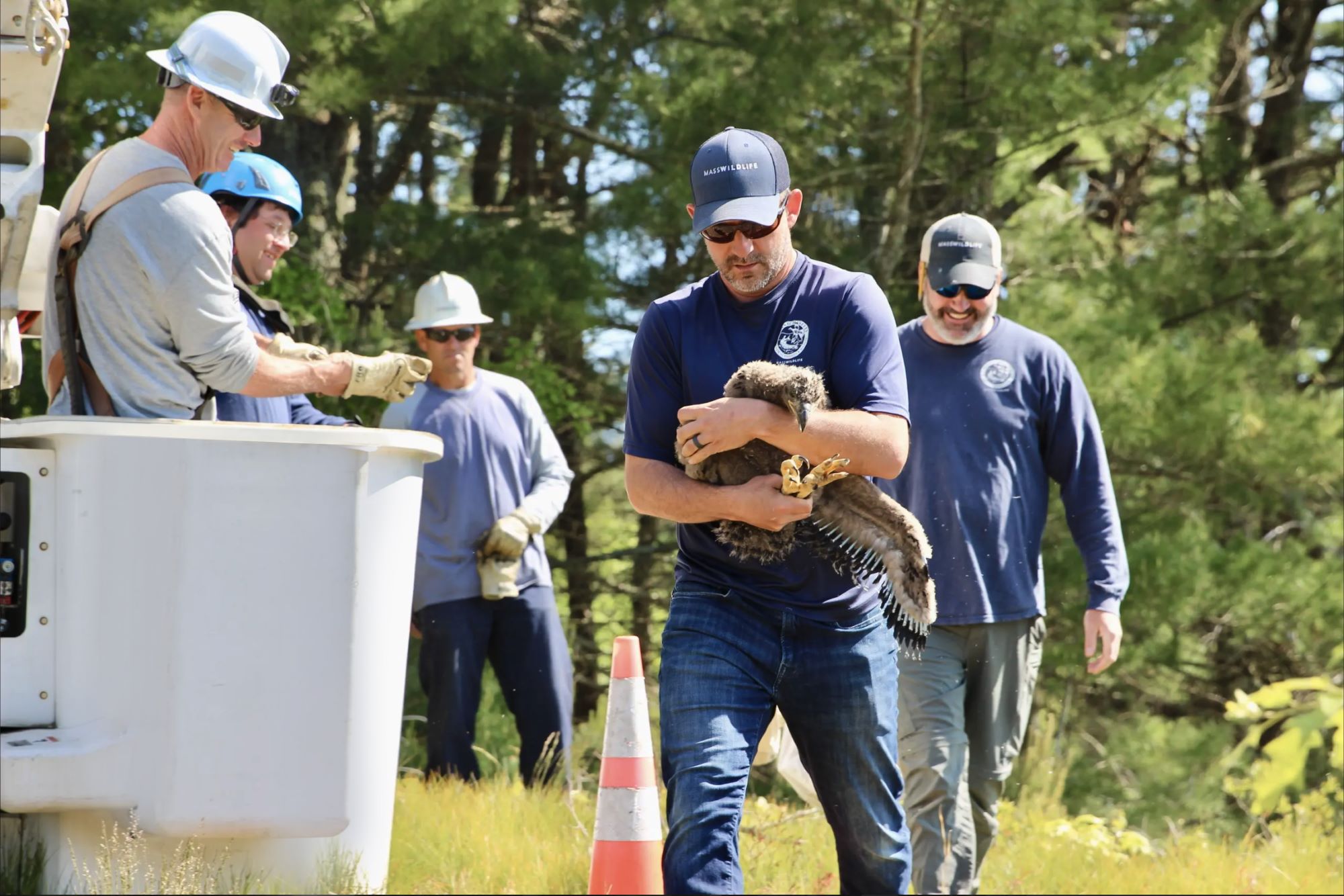
The land we maintain and operate on is often home to a variety of larger animals. We work with partners across our states to understand which animals use this land, and how we can best work to protect them.
We work to help keep birds safe and protect our critical infrastructure.
In partnership with Cape Cod National Seashore, we built bat boxes for the endangered northern long-eared bat to supplement regional habitat loss. We've also developed a detailed turtle protection plan, which involves active-season turtle monitoring and turtle-tracking telemetry.
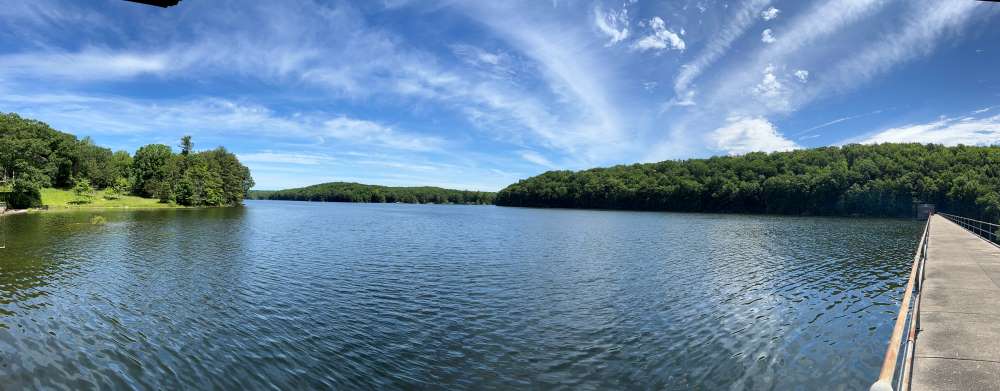
We own and maintain approximately 40,000 acres of land throughout our service territory, along with 22,000 acres of protected watershed land, 15,000 of which is managed by a partnership with the Connecticut Department of Energy and Environmental Protection, The Nature Conservancy and Aquarion Water Company.
Our Eversource Land Trust consists of nearly 1,000 acres of permanently protected open space, which is open to the public for recreational use.
This land has a wide variety of ecosystems, uses and conservation needs, and we work hard with our partners to protect the many functions and resources of forested land through stewardship activities, including research activities and forest management, and the identification and removal of invasive species.
We are working with the city of Portland, Connecticut, on an extension of an existing agreement for the Portland Airline Trail, a stretch of 50 miles of interconnecting trail across 11 eastern Connecticut towns from Thompson to Portland.
We are partnering with landowners along the trail to expand the multiuse trail, allowing hikers, bikers and walkers from all over the state to utilize the trail and parts of Eversource-owned land for passive recreational use.
The extension is being carefully examined to best suit the needs of abutters and our need for safety and access.

Most of our water use is from withdrawals made by our water utility, Aquarion. We strive to be responsible stewards of water resources throughout our operations.
See highlights from other sustainability areas or download the full PDF report for detailed data, graphs and more.
Read the report